Shunda Road, Lincheng Town Bilim ve Teknoloji Endüstri Parkı, Xinghua City, Jiangsu Eyaleti

The main types of ısıl işlem sepetleri used in manufacturing fall into four construction categories: dokuma tel örgü sepetler , yatırım döküm sepetleri , perforated sheet metal baskets ve welded rod and frame baskets . Her inşaat stili daha sonra belirli bir yüksek sıcaklığa dayanıklı alaşımdan üretilir - en yaygın olarak 300-series stainless steel , nickel-chromium alloys such as Inconel 600 veya superalloys like Hastelloy and Haynes — prosesin fırın sıcaklığına, atmosferine ve yük gereksinimlerine bağlı olarak.
Choosing the wrong basket type is one of the most common causes of premature part distortion, uneven heat treatment resultsve unplanned furnace downtime. This guide breaks down every major basket category by construction, material, and application so manufacturing and quality engineers can specify the right carrier for annealing, carburizing, quenching, tempering, and hardening operations.
Quick Overview: Basket Types at a Glance
| Basket Type | Tipik Yapı | Best Suited For |
| Wire Mesh Basket | Woven or welded wire screen | Küçük parçalar, toplu yükler, genel amaçlı işlemler |
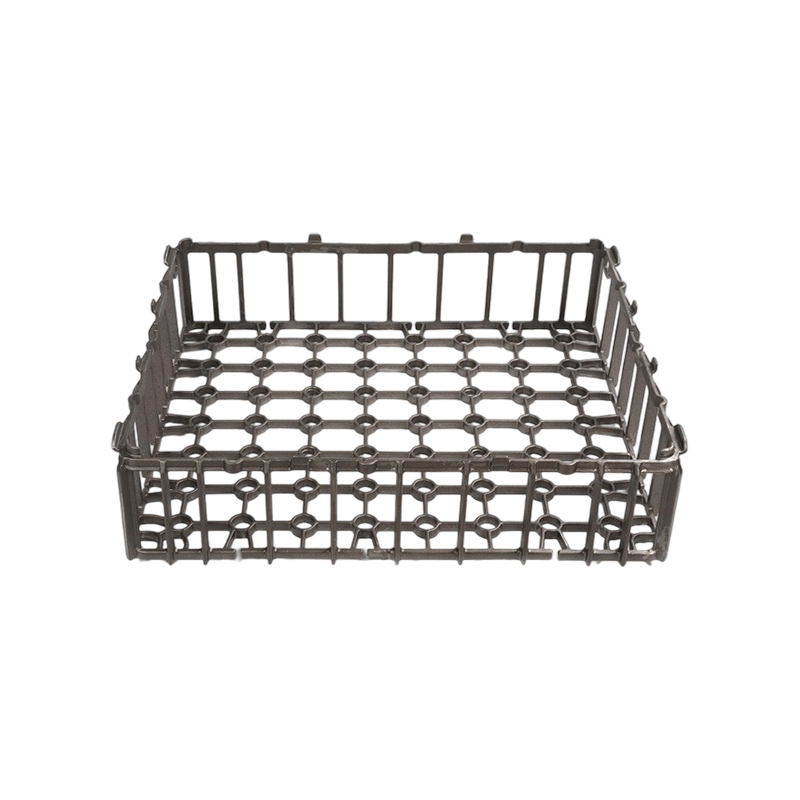
| Investment Cast Basket | One-piece cast alloy frame | Heavy, repeated cycling; vakum fırınları |
| Perforated Sheet Metal Basket | Punched or laser-cut sheet | Fine or granular parts, dip and drain processes |
| Welded Rod / Frame Basket | Rod frame with mesh liner | Stacking loads, custom part geometries |
Classification by Construction Method
Heat treating baskets are first classified by how they are physically built, since construction method directly determines strength, airflow, and how well the basket resists warping under repeated thermal cycling.
1. Dokuma Hasır Sepets
Tel örgü sepetler en yaygın kullanılan türdür çünkü açık dokumaları düzgün ısı dağılımına ve verimli su verme ortamı sirkülasyonuna izin verir. They are built from interlocking wire strands, typically ranging from 8 to 100 mesh count depending on the part size being processed, and are commonly finished with electropolishing to reduce scale buildup. This design is ideal for high-volume batch processing of small components such as fasteners, bearings, and stamped parts, since the mesh keeps parts separated and prevents them from fusing together during the treatment cycle.
2. Investment Cast Baskets
Yatırım döküm sepetleri are formed as a single, one-piece structure, which eliminates welded joints that would otherwise be the first point of failure under thermal stress. Industry sizing data shows cast baskets are available in dimensions up to roughly 48 inches long, 48 inches wide, and 18 inches high, with service temperature ratings spanning approximately 1,250°F to 1,900°F. Because there are no seams to crack or separate, cast baskets typically outlast fabricated designs in continuous, high-cycle production environments and are frequently specified for vacuum furnace applications.
3. Perforated Sheet Metal Baskets
Perforated sheet metal baskets are punched or laser-cut from solid alloy sheet, producing a rigid, low-flex structure well suited to fine, granular, or loose parts that could fall through a wider wire mesh. Sheet thicknesses used in fabrication commonly range from about 0.0625 inches up to 3 inches, allowing the same basic design to scale from lightweight dip baskets to heavy-duty structural carriers. This construction resists sagging under concentrated loads better than woven mesh, making it a common choice for degreasing and pre-treatment dip processes as well as heat treating.
4. Welded Rod and Frame Baskets
Welded rod and frame baskets combine a structural rod frame with a separate woven mesh liner, giving engineers the flexibility to reinforce only the load-bearing points while keeping the rest of the basket lightweight. This hybrid design is especially common for stacking baskets used in tower-style furnace loading, where multiple baskets are stacked several layers high and the frame must resist compressive load from the baskets above it without deforming.
Classification by Alloy Material
Malzeme seçimi de yapım tarzı kadar önemlidir, çünkü sıcaklık toleransı , oxidation resistance ve load capacity vary significantly between alloy families. Repeated exposure above roughly 1,600°F can cause many standard stainless alloys to suffer accelerated oxidation, which compromises the passive oxide layer that normally protects the metal from corrosion.
| Alaşım Ailesi | Yaklaşık. Maksimum Servis Sıcaklığı | Tipik Kullanım Durumu |
| 300-series stainless steel | 871°C'ye (1.600°F) kadar | General-purpose, lower-cost applications |
| Nickel alloy 600 / Inconel | Up to 2,200°F (1,204°C) | Vacuum furnaces, corrosive atmospheres |
| Hastelloy / Haynes superalloys | 2,000°F (1,093°C) or higher | Extreme, continuous high-temperature cycles |
A closer look at the two most common alloy choices helps explain why material selection has such a direct effect on basket lifespan:
- 300-series stainless steel (including grade 330) offers strong load capacity and lower material cost, making it the default choice for processes that stay below roughly 1,600°F.
- Nickel alloy 600 has a melting point between approximately 2,470°F and 2,575°F, an ultimate tensile strength around 93 ksi at room temperature that drops to roughly 15 ksi at 1,600°F, and superior resistance to acidic and corrosive environments compared to standard stainless grades.
- Hastelloy and Haynes superalloys are reserved for the most demanding continuous-cycle furnaces, where both extreme heat and chemical exposure would degrade nickel-chromium alloys more quickly.
Classification by Furnace and Process Application
Sepetler, yapı ve malzemenin ötesinde, destekleyecekleri belirli fırın tipi ve termal prosese göre de tasarlanmıştır.
Toplu Arıtma Sepetleri
Toplu işleme sepetleri hassas konumlandırmanın gerekli olmadığı büyük parça miktarlarının kolay yüklenmesi ve boşaltılması için tasarlanmıştır. Inclined or reinforced walls are commonly added to these designs to distribute the load evenly and reduce deformation during transport between the loading station and the furnace.
Vacuum Furnace Baskets and Trays
Vakumlu fırın sepetleri are typically built as flat base trays rather than deep-sided baskets, since parts in a vacuum environment are arranged to maximize surface exposure rather than stacked in bulk. These carriers are almost always specified in nickel alloy or Inconel due to the oxidation-free, high-temperature conditions inside vacuum chambers.
Su Söndürme Sepetleri
Su söndürme sepetleri require reinforced welded intersections at every joint, because the rapid thermal shock of quenching creates far more mechanical stress on the frame than a standard heating cycle. Bu takviye olmadan, standart ağ bağlantıları yalnızca sınırlı sayıda söndürme döngüsünden sonra çatlayabilir veya ayrılabilir.
Custom-Shaped Positioning Baskets
Custom positioning baskets , such as those designed to center camshafts or other asymmetric parts, use investment casting to create a rigid support structure that holds each part in a fixed orientation throughout the entire treatment cycle. This prevents warping that can occur when long, thin parts are allowed to rest unsupported at a single contact point.
Dokuma Mesh ve Döküm Sepetler: Hangisini Seçmelisiniz?
Her iki tasarım da yaygın olarak kullanılmaktadır ancak farklı sorunları çözmektedir. Aşağıdaki karşılaştırma, her inşaat yönteminin nerede avantaja sahip olduğunu vurgulamaktadır.
| Faktör | Woven Wire Mesh Basket | Investment Cast Basket |
| Upfront tooling cost | Daha düşük | Daha yüksek |
| Resistance to weld-joint failure | Orta | Yüksek (kesintisiz) |
| En iyi yük türü | Küçük, tekdüze parçalar | Ağır, yüksek döngülü yükler |
| Typical lifespan under heavy cycling | Shorter | Daha uzun |
| Özel şekillendirme kolaylığı | Yüksek | Orta |
Sepet Sipariş Etmeden Önce Onaylanması Gereken Temel Özellikler
Specifying the correct basket requires more than choosing a construction type and alloy. Manufacturers typically request the following details before producing a custom design:
- Furnace chamber dimensions and any internal obstructions or clearance limits.
- Maximum operating temperature and the full thermal cycle profile the basket will experience.
- Process type - karbürleme, nitrürleme, tavlama, vakumla sert lehimleme veya tuz banyosu.
- Workpiece weight and geometry , including whether parts are flat, cylindrical, or irregularly shaped.
- Gerekli istifleme yüksekliği and number of basket layers per load.
- Atmosfer türü — endothermic gas, nitrogen, vacuum, or salt.
- Expected annual cycle count and target service life for the basket.
Providing these details up front allows an engineering team to correctly match alloy grade, wall thickness, and mesh count to the actual thermal and mechanical demands of the process, rather than relying on a generic off-the-shelf design that may underperform.
Sepetin Hizmet Ömrünü Uzatan Bakım Uygulamaları
- Inspect baskets regularly for early signs of warping, scaling, or joint cracking before they progress into structural failures.
- Clean baskets after each cycle to remove scale and debris that can accelerate localized corrosion.
- Döngünün ortasında tam bir yapısal arıza beklemek yerine, ağ bölümleri gözle görülür bir incelme gösterdiğinde sepetleri değiştirin veya onarın.
- Track cycle counts per basket so replacement schedules are based on data rather than guesswork.
- Sepetlerin çoğu tamamen değiştirilmek yerine eski haline getirilebildiğinden, mümkün olduğunda ağ astarlarını onarın ve çerçeveleri güçlendirin.
Sıkça Sorulan Sorular
Isıl işlem sepetlerinde kullanılan en yaygın malzeme hangisidir?
300-series stainless steel, particularly grade 330, is the most widely used material for general-purpose heat treating baskets because it balances cost, strength, and temperature resistance up to roughly 1,600°F.
Vakumlu fırınlar neden genellikle nikel alaşımlı sepetlere ihtiyaç duyar?
Vacuum furnaces often run at higher sustained temperatures than atmosphere furnaces, and nickel alloys such as Inconel 600 retain strength and oxidation resistance at temperatures up to approximately 2,200°F, well beyond the practical limit of standard stainless steel.
Can a heat treating basket be repaired instead of replaced?
Evet. Common repairs include replacing worn mesh liners, reinforcing frames at stress points, and correcting minor dimensional distortion, all of which can meaningfully extend a basket's usable service life.
Tipik bir ısıl işlem sepeti ne kadar dayanır?
Service life depends heavily on alloy choice, operating temperature, atmosphere, and loading practices, but well-specified baskets in the correct alloy for their process can sustain thousands of thermal cycles before requiring replacement.
Do all heat treating baskets need to be custom designed?
Mutlaka değil. Standard baskets in common sizes work well for general-purpose processes, but custom designs are recommended whenever part geometry, furnace dimensions, or atmosphere chemistry fall outside typical off-the-shelf specifications.
Sonuç olarak
Sağ heat treating basket comes down to matching construction method and alloy to the actual demands of your furnace and process. Woven wire mesh baskets remain the most versatile and cost-effective option for general bulk treatment, yatırım döküm sepetleri deliver the longest service life under heavy, repeated cycling, and specialized alloys like nickel 600, Hastelloy, and Haynes en aşırı sıcaklık ve korozyon koşulları için ayrılmıştır. Matching these variables correctly from the start reduces part distortion, extends basket lifespan, and keeps furnace operations running without unplanned downtime.